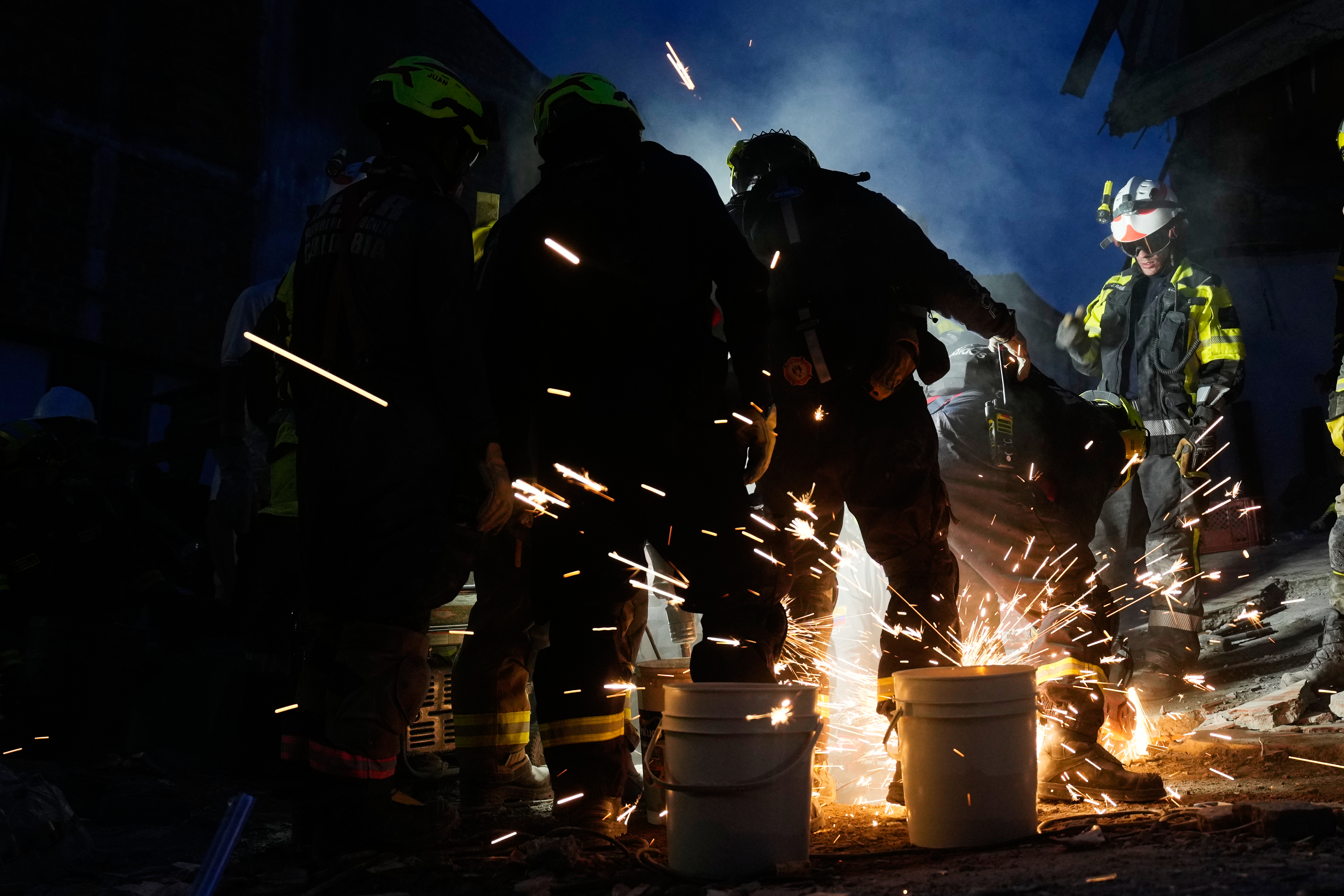
He wandered two quake-shattered landscapes. Now an AP photographer reflects on what his lens saw

BOGOTA, Colombia (AP) — He moved through the aftermath of two deadly earthquakes in Venezuela and Colombia, documenting the damage to structures, neighborhoods and — most importantly — human lives. All
through it, Associated Press photographer Fernando Vergara kept one thing top of mind: the responsibility of photographing people living through their worst moments.
Vergara, who has been making photographs for AP for 20 years, paused from his work this week to reflect on doing his job through physical and emotional peril — and how he approached the balancing act that chronicling tragedy requires. Vergara spoke Thursday while photographing activity at an aid collection center in Bogota for victims of the recent earthquake in Pereira.
He compared the destruction there with what he witnessed after earthquakes struck Venezuela in late June. Vergara said the impact in Venezuela was greater, with taller apartment buildings collapsing and a higher death toll.
Images from La Guaira, Venezuela, show collapsed buildings, rescue crews searching through rubble and relatives grieving for loved ones. Vergara recalls walking through streets filled with dust and the smell of decomposition as rescuers worked in difficult conditions.
In Pereira, Colombia, Vergara documented rescue efforts after the Aug. 10 earthquake, including the moment survivor Daniela Largos Sanchez was carried from the rubble the following day. Vergara says much of the damage involved shorter buildings of one to three stories.
For Vergara, some of the most powerful moments come when rescuers find someone alive. He says are the moments he most hopes to capture with his camera.
Here are some of his reflections from the quake zone — and some of his recent images.
Comparing the two quakes
“Compared to the earthquake in Colombia, the one in Venezuela was a bit stronger, considering the losses. Venezuela had many tall buildings. A lot of people were living in apartment buildings, and the number of deaths was much higher than in Colombia. Recently in Pereira, the number of deaths are lower. It remains dramatic, but the buildings there were a bit shorter. The damaged houses were one to three stories tall, compared to Venezuela, where the buildings were much, much taller.”
What it was like on the ground
“What I witnessed in Venezuela, walking through the streets in La Guaira, the smell of rot was overwhelming, the dust in the air and the heat made the rescue of those trapped under the rubble much more dramatic.”
How to respect those affected
“What is the photograph that I, as a reporter, seek in an earthquake or in a situation of such calamity? It’s important not to disrespect the victims’ families with my photographs. On the other hand, it’s about showing the situation with great sensitivity as it unfolds and to convey a message to people with my photographs.”
Documenting bright moments amid the tears
“The most important message is the rescue of a person alive during an earthquake. Seeing someone alive brings immense joy. When a rescue team, firefighters, civil defense, or even volunteers rescue a person alive, everyone embraces with happiness, and that is the happiness I seek to capture with a photograph in an earthquake.”
For more coverage of the most recent quake in South America, click here.