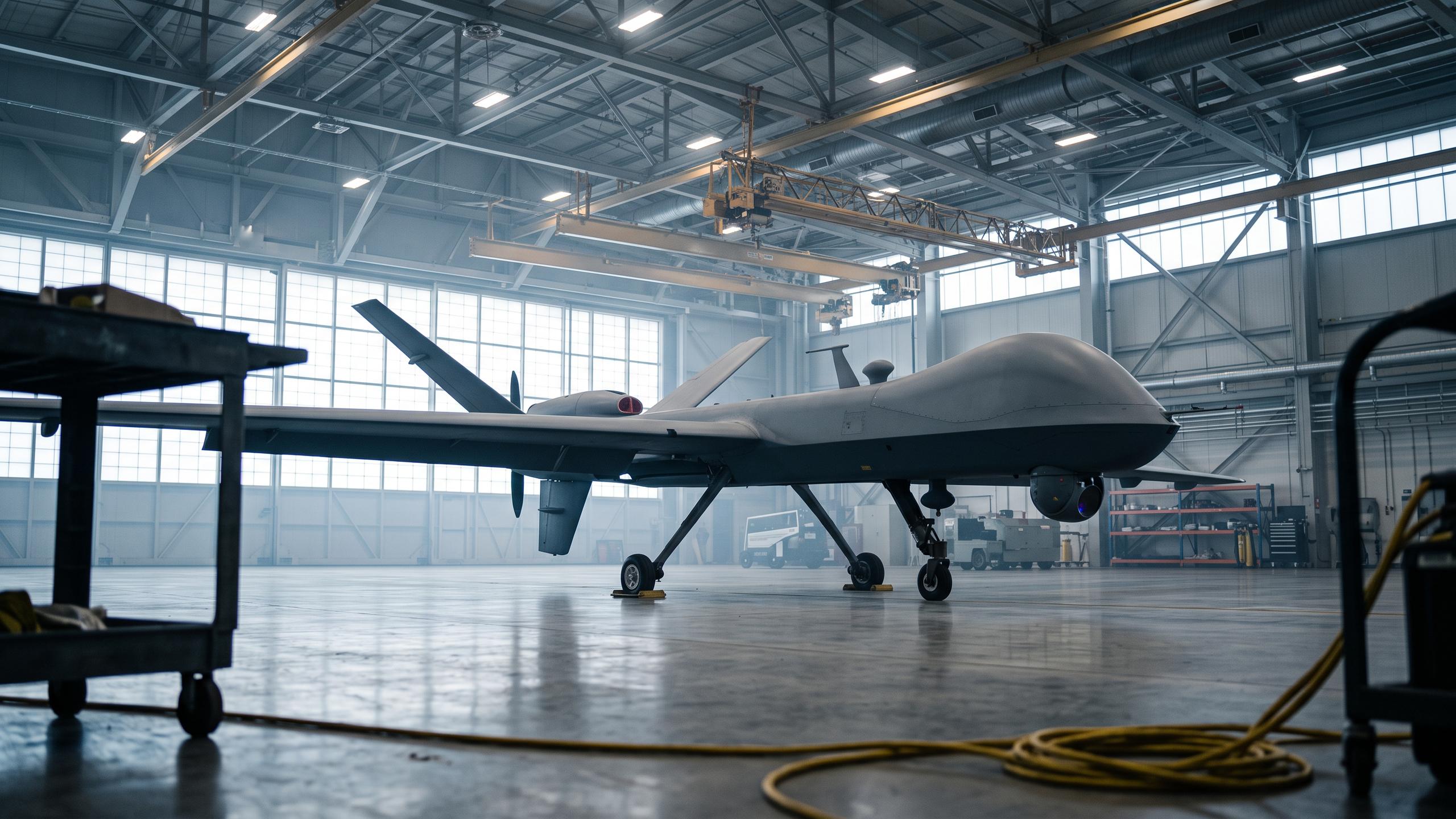
U.S. Representative Bob Latta Advocates for Diversified Drone Supply Chains at Ohio Future Forum

What's Happening?
U.S. Representative Bob Latta participated in the annual Ohio Future Forum in East Liberty, where discussions focused on Taiwan's drone industry, semiconductors, and tire technology. The event, held on October
8, also featured the head of Taiwan's representative office in Chicago, who highlighted Taiwan's significant drone manufacturing capabilities, with over 200 firms and 150,000 light drones exported in the first seven months of the year, primarily to Eastern Europe. Representative Latta emphasized the critical need for the United States to avoid supply chain dependence on China, particularly in advanced technological sectors like autonomous driving and drones. He stressed that American citizens should support and believe in technological development to maintain leadership in these areas. The forum attracted various Ohio state officials and business leaders, underscoring the growing interest in international technological partnerships.
Why It's Important?
Representative Latta's remarks underscore a significant U.S. national security and economic priority: reducing reliance on China for critical technologies. The emphasis on Taiwan's drone industry at a U.S. forum highlights a strategic effort to diversify supply chains and foster partnerships with allies. This initiative is crucial for bolstering U.S. technological independence and resilience against potential geopolitical disruptions. By promoting collaboration with countries like Taiwan, the U.S. aims to secure access to advanced components and systems, ensuring that its defense and commercial sectors are not vulnerable to foreign control. This move could lead to increased investment in domestic manufacturing and research, creating jobs and stimulating economic growth in states like Ohio, which are actively seeking to attract such industries. The focus on advanced technology also positions the U.S. to maintain its competitive edge in global innovation.
What's Next?
Following Representative Latta's advocacy, it is anticipated that there will be continued efforts to strengthen U.S.-Taiwan collaboration in advanced technology sectors, particularly drones and semiconductors. U.S. localities, including those in Ohio and New York, are actively courting Taiwanese drone manufacturers, suggesting potential future investments in U.S.-based research and development sites or manufacturing facilities. This could involve further bilateral agreements, trade missions, and incentives to encourage Taiwanese companies to establish a presence in the U.S. The ongoing discussions about avoiding supply chain dependence on China are likely to influence future U.S. policy decisions regarding trade, technology transfer, and national security. Businesses in the U.S. and Taiwan can expect to see more opportunities for joint ventures and partnerships aimed at developing secure and reliable supply chains for critical technologies.
Beyond the Headlines
The discussions at the Ohio Future Forum reflect a broader geopolitical strategy to counter China's growing influence in global technology supply chains. By actively seeking partnerships with Taiwan, the U.S. is not only addressing economic vulnerabilities but also reinforcing its diplomatic ties with a key democratic ally in the Indo-Pacific region. This strategic alignment has implications beyond immediate economic benefits, potentially shaping future international norms around technology development and trade. The emphasis on 'green drone systems' and secure supply chains also highlights an evolving ethical dimension, where technological advancement is increasingly intertwined with national security and geopolitical considerations. The long-term impact could be a more fragmented global technology landscape, with distinct supply chains emerging based on geopolitical alliances, rather than purely economic efficiencies.