NASA's Curiosity Rover Uncovers Unprecedented Organic Molecules on Mars, Suggesting Ancient Habitability

What's Happening?
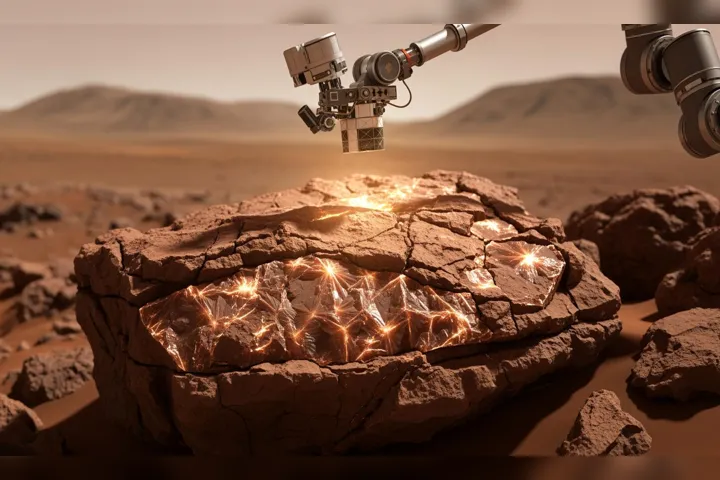
NASA's Curiosity rover has discovered the most diverse collection of organic molecules ever found on Mars, according to a new study published in Nature Communications. The rover drilled a rock sample in 2020, revealing 21 carbon-containing molecules, seven of which were detected for the first time on the Red Planet. These findings suggest that ancient Mars had the right chemistry to support life. The sample, named 'Mary Anning 3,' was collected from a region on Mount Sharp that was once covered by lakes and streams, enriching the area with clay minerals that preserve organic compounds. Among the newly identified molecules is a nitrogen heterocycle, a structure considered a precursor to RNA and DNA. The discovery of these molecules, including benzothiophene, a carbon- and sulfur-bearing molecule, increases the prospect that Mars could have supported life in its ancient past.
Why It's Important?
The discovery of diverse organic molecules on Mars is significant as it enhances the understanding of the planet's potential to have supported life. These findings provide crucial insights into the chemical processes that may have occurred on Mars billions of years ago. The presence of nitrogen heterocycles, which are precursors to genetic materials like RNA and DNA, suggests that the building blocks of life could have existed on Mars. This discovery not only informs future Mars exploration missions but also contributes to the broader search for life beyond Earth. The ability to detect and analyze such molecules on Mars demonstrates the advanced capabilities of the Curiosity rover and sets a precedent for future missions to explore the potential habitability of other celestial bodies.
What's Next?
Following this discovery, NASA plans to continue analyzing the data collected by Curiosity and other Mars missions to further understand the planet's past environment. The findings will guide future missions, such as the European Space Agency's Rosalind Franklin rover and NASA's Dragonfly mission to Saturn's moon Titan, which will carry similar instruments to study organic molecules. These missions aim to explore the potential for life in other parts of the solar system, building on the techniques and discoveries made by Curiosity. The ongoing research will focus on identifying more complex organic compounds and understanding their origins, whether biological or geological.
AI Generated Content
For the benefit of users - Parts of this article may include content generated using AI tools. Our teams are making active and commercially reasonable efforts to moderate all AI generated content. Our moderation processes are improving however our processes are carried out on a best-effort basis and may not be exhaustive in nature. We encourage our users to consume the content judiciously and rely on their own research for accuracy of facts. We maintain that all AI generated content on our platform is for entertainment purposes only. To know more about how we use AI, you can write to us at
Close AI Generated Content