Vineyard Wind Completes Construction Amid Trump Administration's Opposition

What's Happening?
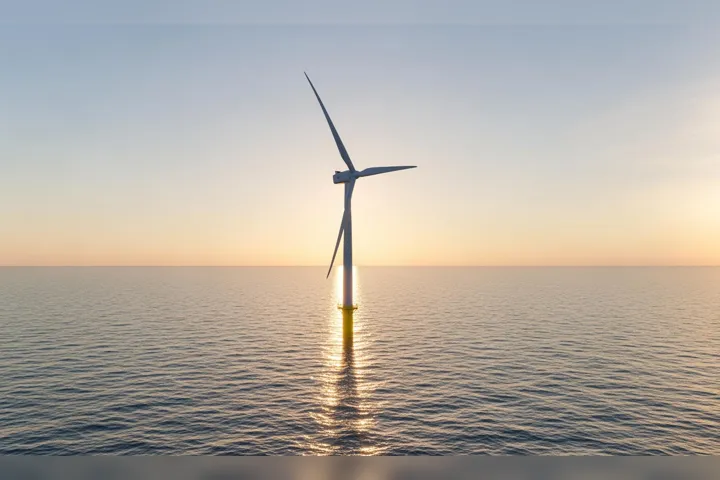
Construction has been completed on Vineyard Wind, a major offshore wind farm located 15 miles south of Martha’s Vineyard and Nantucket, Massachusetts. This project marks the first of its kind to reach completion during President Trump's tenure, despite his administration's efforts to halt its progress. Vineyard Wind, a joint venture between Avangrid and Copenhagen Infrastructure Partners, consists of 62 turbines capable of generating 800 megawatts of electricity, enough to power approximately 400,000 homes. The Trump administration had previously paused construction on this and other East Coast offshore wind projects, citing national security concerns. However, legal challenges allowed the projects to resume. Massachusetts Attorney General Andrea Joy Campbell emphasized the project's importance for reducing energy costs, meeting climate goals, and creating jobs.
Why It's Important?
The completion of Vineyard Wind is a significant milestone in the U.S. renewable energy sector, particularly in the context of offshore wind development. It represents a shift towards cleaner energy sources, aligning with broader climate goals and reducing reliance on fossil fuels. The project is expected to contribute to economic growth by creating jobs and lowering energy costs in Massachusetts. Additionally, it highlights the ongoing tension between federal energy policies under different administrations, with the Trump administration favoring traditional energy sources and the Biden administration supporting renewable energy initiatives. The successful completion of Vineyard Wind could encourage further investment and development in the offshore wind industry, potentially leading to more sustainable energy solutions nationwide.
What's Next?
With Vineyard Wind now operational, attention may turn to the scaling up of other offshore wind projects along the East Coast. The Biden administration's support for renewable energy suggests that additional projects could receive the necessary approvals and funding to proceed. As the industry grows, there may be increased focus on technological advancements, such as floating turbine technology, which could expand offshore wind capabilities to other regions, including the Pacific Coast. Stakeholders, including state governments and private companies, are likely to continue advocating for policies that support renewable energy development, potentially leading to further legislative and regulatory changes.
AI Generated Content
For the benefit of users - Parts of this article may include content generated using AI tools. Our teams are making active and commercially reasonable efforts to moderate all AI generated content. Our moderation processes are improving however our processes are carried out on a best-effort basis and may not be exhaustive in nature. We encourage our users to consume the content judiciously and rely on their own research for accuracy of facts. We maintain that all AI generated content on our platform is for entertainment purposes only. To know more about how we use AI, you can write to us at
Close AI Generated Content